by Greyson Geiler | November 14, 2022
Inflation data came out of the Bureau of Labor Statistics this week and initiated a fierce rally in asset markets –the biggest rally by some measures since just after the Covid selloff in 2020. Some of the rally was short-covering and some of the rally was new money pouring into markets assuming that the bear market is now over. All in all, it was an impressive rally that continued to a minor degree into Friday.
What is interesting is the information that sparked this rally. The CPI index, a broad-based measure of goods and services costs, increased 0.4% for the month and 7.7% from a year ago. Respective estimates from Dow Jones were for rises of 0.6% and 7.9%. So, the inflation looks only slightly less than what the market anticipated – and we saw a rocket launch in asset prices like that? Wow. Many people believe that the Federal Reserve will be able to slow down its aggressive interest rate hike program which will mean asset prices can go higher. Lots of speculators were short and had to buy to cover and it appears that the FOMO trade (Fear Of Missing Out) may be back as well. Also, relief that the power of the Federal Government is at least somewhat divided between political parties. If they must focus some of their energies on fighting each other, maybe they will do less damage to the citizenry and economy…
Interestingly – the history of recent bear markets is different than how investors are expecting it to occur this time around. The last few bear markets haven’t made their lows until AFTER the Federal Reserve started lowering rates. This time around the Fed hasn’t even stopped RAISING rates yet. Maybe some investors are jumping the gun piling back in at this point – but maybe not. Our assessment is the Fed will only have more leeway to continue to raise rates as strong as the stock and bond markets are – we think they only lower rates after something breaks. Today we are looking at bullish sentiment growing in front of something breaking… hmmm.
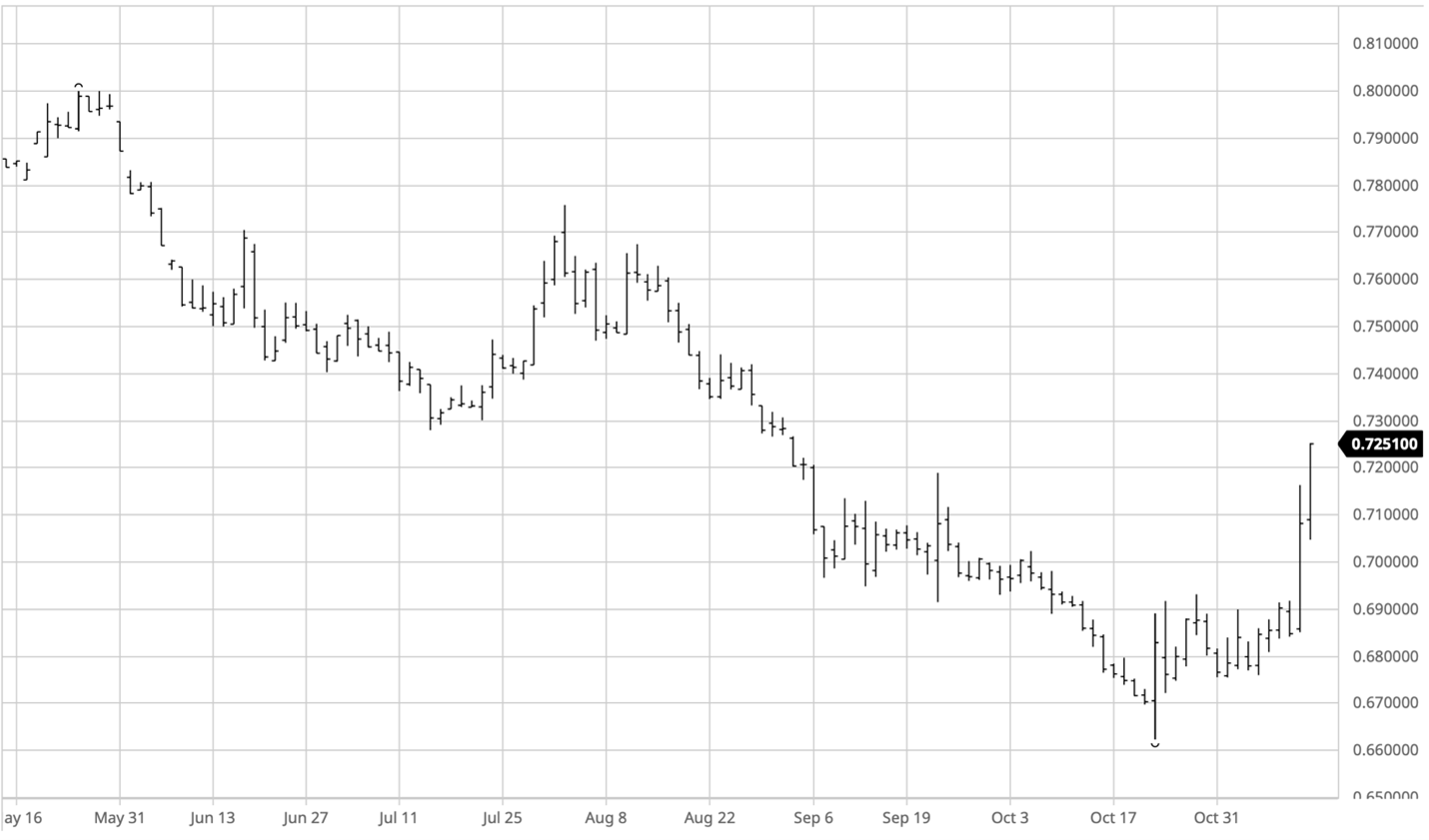
So, what might break? Well, we have been saying for years that the Japanese Yen was the canary in the coal mine of the loose financial conditions that the world’s central banks have been perpetrating for years. The recent situation in Japan showed a currency (Yen) that was melting down on an epic scale. The Bank of Japan has been sacrificing the value of the currency to keep the price of their government’s bonds high in this bear market the rest of the world is experiencing. The Bank of Japan is burning through its reserves of U.S. Dollars at a disturbing rate. Again, they are selling dollars and buying Yen to support the value starting the year they had about $1.4 trillion – now they are down to $1.19 trillion as of the end of October. Now the good news for the near term their intervention has worked.
Take a look at this chart of the value of the Japanese yen versus the U.S. Dollar…
Clearly an acceleration of the Yen to the downside could have represented “something breaking” but that has not happened. You see the ferocious bounce in the value of the Yen – the BOJ interventions have worked. Continual central bank intervention and manipulation is obviously not a good long-term strategy for stewarding the world’s economy – but the a near term disaster appears to have been averted. The asset markets around the globe have rallied in agreement…
We have been saying for weeks that domestic markets (stocks, bonds, commodities) have been holding together well considering all the negativity that is surrounding the financial world. In simple terms we thought the negativity has been overblown. However, now that the pressure has officially been taken off due to the ferocious stock and bond market rallies of last week, we flip around and start getting worried again. Here are the main reasons why…
- The Fed will continue to raise rates even if they are slowing down the pace of doing so. The debt load that the entire world is under cannot sustain higher interest rates. Continue watching the actions of the Fed and the results around the world – possibly more things “breaking.” Especially in Japan and Europe because that is where things have already broken and have required repair
- Bullishness is returning now when the Fed hasn’t even stopped raising rates. That’s not in coordination with history. See above…
- With interest rates significantly higher there are no-market-risk investing strategies that have significant earning potential. Stocks get overpriced more quickly by comparison as interest rates go up
The recent rally in stocks is an excellent time to readjust your portfolio if you feel you have too much risk. We are continuing to look for cracks in the dam that may lead to big challenges in financial markets – so stay tuned…
Regards and good investing,
Greyson Geiler
by Greyson Geiler | November 7, 2022
There have been some wild trading days recently in U.S. stocks and bonds both up and down driven by the news du jour. We have had earnings reports, inflation reports, employment reports, wild weather reports, war reports, etc…
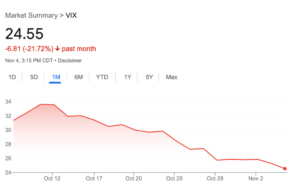
Strangely enough, with all of that going on the indicator of financial market volatility – the VIX – has gone down precipitously in the last few weeks – take a look…
The VIX moving lower is a little counter intuitive considering the news on the wires and the fact an election is right around the corner…
There are some positive things about where the economy and asset markets are right now. First and foremost as we have mentioned several times in the last few months – things are actually holding together. The idea that the our economy and markets can withstand the abrupt about face that the Federal Reserve has performed this year is actually impressive. Just to recap, if you rewound one year, you would see the Federal Reserve purchasing $120 Billion of assets in the open market MONTHLY to support markets and an interest rate set at essentially ZERO. Considering the about-face, how are we holding together? Foreign assets fleeing worse markets overseas coming to our shores? The market is holding together now but the effects of Fed actions just haven’t hit yet? Cash levels are still very high on corporate and even consumer balance sheets and that will sustain markets for a while yet. No one knows for sure -but markets are holding together surprisingly well.
Past just anecdotal opinions, some of the things that are empirically bullish include corporations coming out of stock repurchase blackout periods. Right now, corporate buybacks are running at about $3-4 billion per day and that is likely to increase to $4-5 billion in the near term. This is obviously a bullish indicator. Other indicators include the positioning of speculative funds. Stock funds are not as heavily invested as they normally are which indicates buying needs to come in. Many hedge funds are actually SHORT the market which is another indicator that a lot of the selling has already occurred, and it is now buying that will be entering the market.
Additionally, the bear market is getting on in age – the long-term historical duration of a bear market is 11 months and that is exactly where this one sits. Certainly, the bear market could continue, but history is starting to wander toward the bullish side.
As far as the negatives that are affecting these markets, they are so obvious we almost don’t even need to write them. Interest rates going higher is of course the most glaring bearish indicator, but of course you can throw in a lot of geo-political strife and things look like the end of the world may be near. Many tech companies are announcing layoffs from their workforce – and the strong employment situation has been the shining star of the economy over the last few months. If inflation starts ticking up, many feel that the economy could start to domino downhill. But again – when things look so grim and the market isn’t going down, it makes us think that things are stronger than many are betting…
Of course, the election coming up makes us think about investing differently depending on who has power. The most obvious conclusion is that the green-energy investments are going to take a hit should the Republicans gain majorities in the House and Senate. Accordingly, traditional energy investments may catch some momentum. In general, investors historically have benefitted from a division of party power in Washington. So that favors Republicans gaining strength. Biotech and defense spending are two other sectors that may get a boost from Republican victories and additionally the Republicans will probably take tax hikes off the table if they gain more power- which would be bullish for the stock market in general. Should the Democrats retain their majorities one may expect infrastructure and health care stocks to be supported.
All our analysis could of course be completely moot depending on the actions of the Federal Reserve. Although we do admit there may be some behind-the-scenes motivations for Fed actions that we are not privy to, in general we fear that the Fed is reading from a faulty playbook. If you have a hammer, everything looks like a nail and right now the Fed seems to be swinging their hammer -interest rate rises- at every nail they see. Higher interest rates are not the universal deterrent for inflation that Fed appears to believe that they are. We believe that higher interest rates from some perspectives ARE INFLATIONARY and if the Fed’s actions are causing inflation, then why would they continue them in order to reduce inflation? Your guess is as good as ours – apparently beatings will continue until morale improves. We’ll see how well that works out. At the end of the day, everyone fears the Fed will continue to raise rates until something breaks – so do we. If that is keeping you up at night, don’t be shy to lighten up your stock portfolio. With interest no-risk interest rates as high as they have gotten we have essentially created a Universal Basic Income for rich people. Just another of the unintended consequences of having the Federal Reserve in charge…
As always – stay tuned and don’t sell your gold.
Regards and good investing,
Gresyon Geiler

by Greyson Geiler | October 17, 2022
Volatility is still the norm in financial markets as the S&P puts together one of its biggest reversal moves in history. The CPI inflation numbers came out last week (Thursday) and surprised to the upside – meaning the Fed’s interest rate increases over the last few months haven’t tamed inflation. The stock and bond markets opened much lower on this news – testing new lows for the year by many measures – but then rallied all day. Short covering in the bond market started the asset markets higher, and by the end of the day closed with stock indexes exploding higher with the short covering spilling over into the stocks.
The rally turned into the fifth largest inter-day turnaround in market history. However, the markets gave most of the gains back of Friday. One important thing to note is that much of the selling was new hedge fund short selling which should set us up for another short covering rally down the road. Veteran traders are describing the underlying conditions of the financial markets as “broken” as liquidity has dried up exacerbating the volatility. The variables influencing the market now are widespread – all the way from U.S. company earnings reports to Fed announcements/rate hikes, inflation numbers, nuclear weapons threats and supply chain disruptions…you get the idea. At this point no one knows where this is going – but more volatility is a good bet.
Weeks ago, we mentioned that it appeared the world’s central banks had actually broken something with the gilts in the UK. The Bank of England came into the sovereign bond market and backstopped the pricing of gilts in order to “avoid a Lehman moment.” Basically, they implemented a focused Quantitative Easing in the sea of quantitative tightening that is happening worldwide. That took pressure off many different asset markets worldwide, but the question remains – how does this situation not get progressively worse as central bankers continue to add to the mountain of bad debts?
The next obvious question is – when and where will the next event occur requiring the “lenders of last resort” to come piling in and save the day. Well now we have the answer to that question, and it comes from Switzerland. As it turns out, for the second time since Oct 5th, the Fed has lent money through a swap line with the Swiss Central Bank. Between the two more than $6 Billion has been lent. This is the largest swap line rescue of short-term money needs in history – and it begs the question why in one of the best economies in the world has another crack in the dam shown? Most guesses suggest that it is Credit Suisse that is having issues and with an entity of that size and complexity it is unknowable how bad things can get…
So, the world’s central banks had the accelerator to the matt for the last decade and a half pouring good money/credit after bad. Now they are stomping on the brakes and things are flying through the windshield. The strength of the U.S. dollar is the real threat to continued asset market damage worldwide. Take a look at the dollar index’s long-term chart…
The dollar is the grease of the economic wheels for the whole planet and the Fed is between a rock and a hard place trying to keep economies running and still taming inflation. Higher interest rates push the dollar higher vs currency alternatives. Logic says that interest rate increases can’t continue much longer, but with inflation numbers still high we don’t know how the Fed will respond. The only silver lining is the inflation numbers from an American perspective are nearly benign compared to most of the rest of the world.
Markets are showing some panic due to this for good reason. Short term option trading has turned into a wild casino, and no one can be confident how this will end. Bank of America, Chief Investment Strategist Michael Hartnett has a favorite saying for when critical phase shifts take place in the market, “Markets stop panicking when central banks start panicking.”
Lighten up if you have too much risk, never sell your gold and stay tuned…
Regards and good investing,
Greyson Geiler
by Greyson Geiler | October 3, 2022
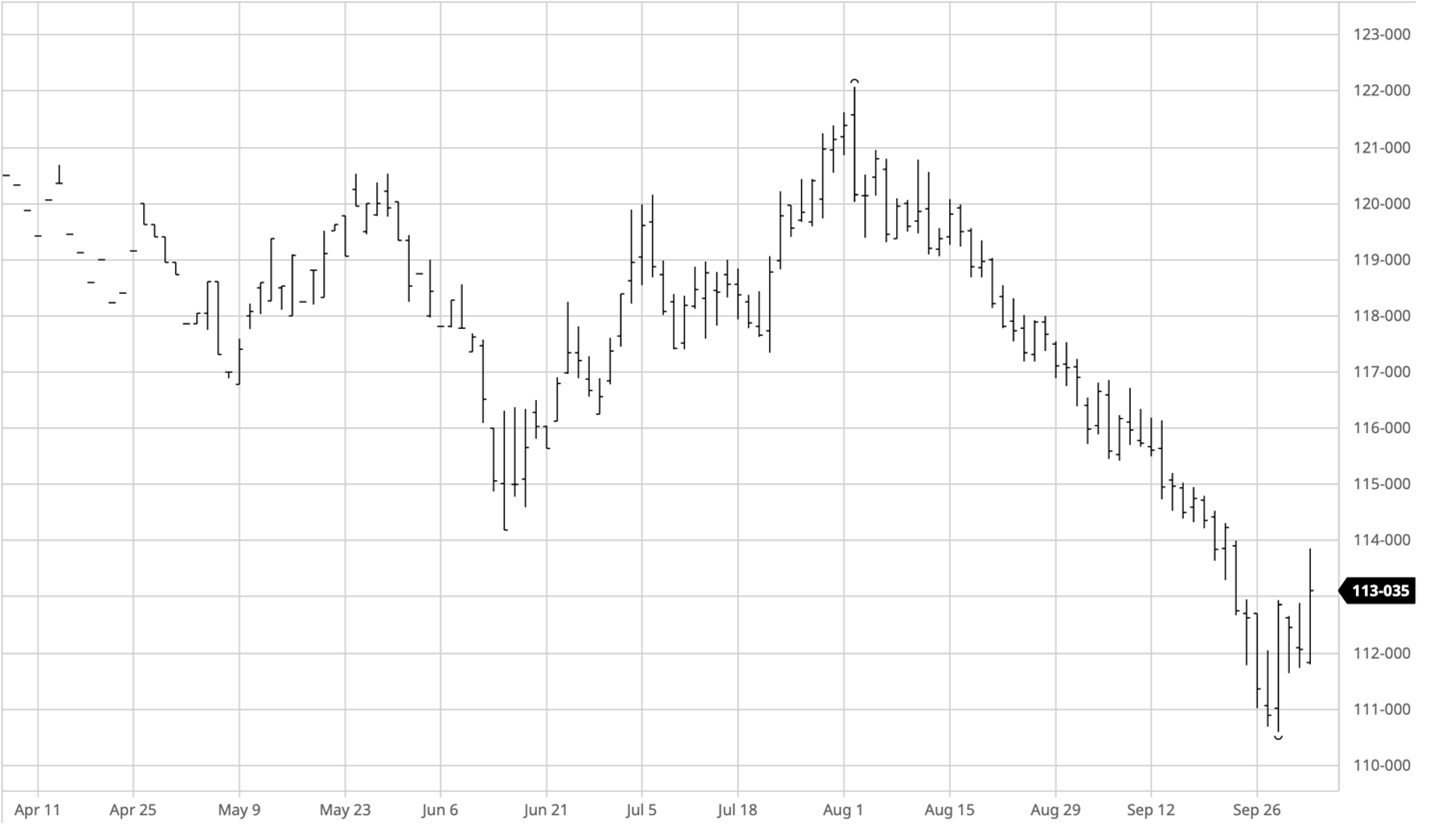
Central bankers around the world speak frequently and try to coordinate their activities. The raising of interest rates in an attempt to stave off inflation is consistent among central banks of the world’s developed economies. Last week there was a serious event in the UK and the Bank of England was the first central bank to break ranks and reverse back to quantitative easing. Some of the pension funds of the UK were being forced into liquidation of some of their bonds to meet margin calls.
The Bank of England stepped in to support the bond prices to avoid a “Lehman moment” and a complete meltdown in bond prices. This is really important information because very recently, Bank of England Governor Andrew Bailey was as “hawkish” as Fed Chair Powell about getting inflation under control. The BOE had just raised rates in August by .50%. That was the largest hike in 27 years!
The world’s financial markets responded positively, and U.S. Stocks, bonds and commodities rocketed higher. Many U.S. financial traders had “short sold” stocks and bonds and had to buy back quickly. The fun was quickly over, however when economic news came out the next day indicating that U.S. employment numbers were still strong. That indicated that the Federal Reserve will probably stay the course raising interest rates which sent markets tumbling the next day. We pretty much closed on the low of stocks and bonds on Friday and the month of September ended dismally.
We have been discussing our concern about the actions of central banks in nearly every post. Clearly the Fed waited too long to address inflation (they still had Covid emergency policies in place in February of 2022.) Now they have reacted drastically and stopped buying $120 B in bonds every month and raised short term-rates 3% in nine months. There is NO WAY that these actions have followed through to the economic numbers yet. Meaning, as quickly as the Fed has made these tightening moves, we don’t believe that we know yet how much things will already be affected.
One thing we do know, there are huge imbalances in our systems – including pensions – in the U.S. There are a lot of skeletons in the U.S. collective financial closet, so we need to let some time pass as the Fed changes course. No one can say definitively how this works out. However, according to one of the best investors in the world, Stan Druckenmiller, a hard landing in the economy is almost a sure thing at this point.
The tightening of the Fed has already broken things including at the Bank of Japan and the Bank of England. The market has priced in a ton of fear that Chairman Powell will stick to his guns and take on inflation with full force. The financial press has been reporting that 4% short term interest rate is the target come hell or high water. With the brutal selloff in treasuries over the last few weeks, we are seeing what “hell or high water” may look like. The liquidity of the U.S. treasury market is the standard for all financial marketplaces. If the Fed raises rates so aggressively that they put said liquidity at risk, all bets are off and no one knows how low “low” would be. Essentially after blindly engineering a rocket launch of inflation, the Fed would trigger a giant deflationary meltdown.
Reading the tea leaves it appears that the Federal Reserve is now indicating that it may be ready to slow down a bit on their aggressive tightening. Some of the most recent economic numbers – residential housing prices for example – have shown very large pullbacks. Nick Timiraos has become a mouthpiece for Chairman Powell and the Federal Reserve in general. This weekend he was tweeting that the Fed has gone too far too fast. This is nearly the equivalent of Chairman Powell saying it himself. If we are correct in this, there will be pressure coming off of the financial markets and, for the short term at least, we can breathe a sigh of relief.
Regards and good investing,
Greyson Geiler
by Greyson Geiler | September 26, 2022
We have had two very rough weeks in the world’s financial markets. The stocks and bonds have sold off aggressively in the U.S. and across the globe. The S&P 500 went after its 2022 low that was set in June. Overseas rumors of a military coup in China, currency intervention by the Bank of Japan to support the Yen and continued challenges across the board in Europe all added to the volatility in financial markets. Although Friday looked like some sort of a short-term low because of the liquidation, going forward there are huge problems to be addressed.
Friday’s option trading set some all-time records. Specifically put option buying was the highest volume on record. This means that more people bought insurance against U.S. stocks selling off than in any day in history. The last biggest put volume day was the low of the market this June. This tells us that sentiment is terrible – many more market bears out there than market bulls – which generally means that a lot of most of the selloff may have already happened.
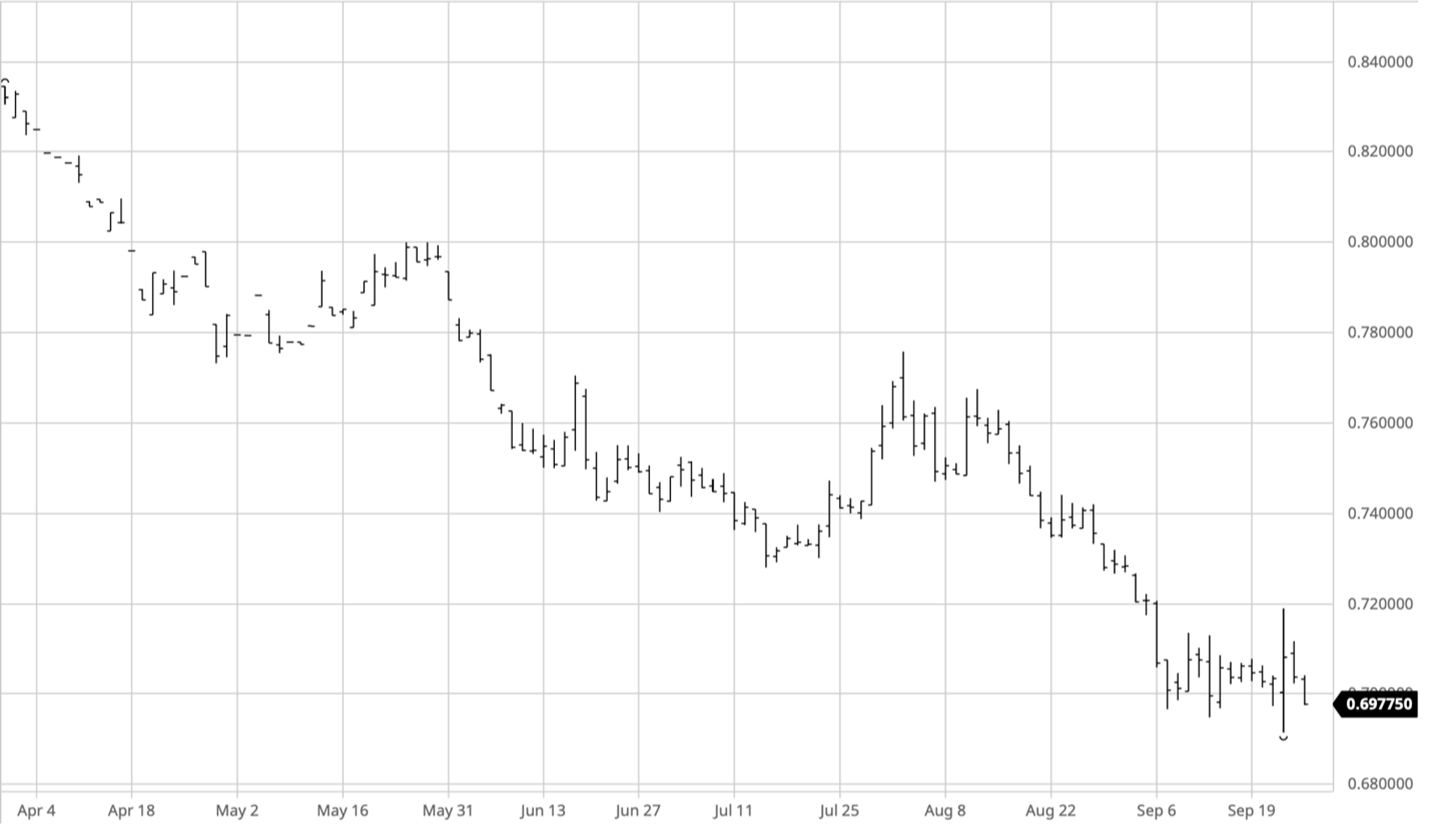
For years we have been noting the lack of foresight from the world’s central bankers and specifically called the Japanese yen the “canary in the coal mine” of the collective attempt to print money to generate prosperity. We are worried now that about our canary is living on borrowed time. Take a look at the recent price action in the Japanese yen…
The big trading range you see from last week represents the Bank of Japan intervening and propping up the value of the Yen – which as you can see has lost 20% of its value versus the U.S. Dollar just since April. That is a staggering move for the world’s third largest economy, and we fear it will get worse. Their interest rates continue to lag the rest of the world and their bond market is barely trading. The owners of Japanese Government Bonds are simply selling those to the Bank of Japan at artificially inflated prices. The BOJ now owns 540 trillion-yen worth of the government bonds – yes you read that correctly. This is a monetization of debt that will eventually end with the yen being worthless. We have no perspective on the timing of that, of course…
The strength of the U.S. has spilled over into Britain as well with the British pound hitting an all-time low this morning. It has been a DRAMATIC plunge in the pound just in the last week or so. The Chinese currency is weak along with the Australian dollar and New Zealand Kiwi. The strongest currencies other than the dollar are the Russian ruble and the Mexican Peso. We like the peso holding together as it bodes well for North American business. But the situation as a whole is getting dire. The world’s currency markets are getting hit really hard – mostly by the aggressive rate hiking that our Federal Reserve is doing.
Going forward we anticipate that the monetary flight to the U.S. from much of the rest of the world is not going to slow down. What we hope does slow down is the rate at which our Federal Reserve is raising interest rates. The Fed has repeatedly said that they need the economy to slow down after they kept their foot on the gas for WAY too long. Looking at the some of the economic numbers starting to roll in we would say to the Fed “be careful what you wish for.” If they keep going like this, something is going to break – it may be in the emerging markets, and we may be insulated from it here in the U.S. – but something will break. Keeping an eye on the currency markets will be a good way to keep those things on your radar. Tighten the belt and stay tuned.
Regards and good investing,
Greyson Geiler